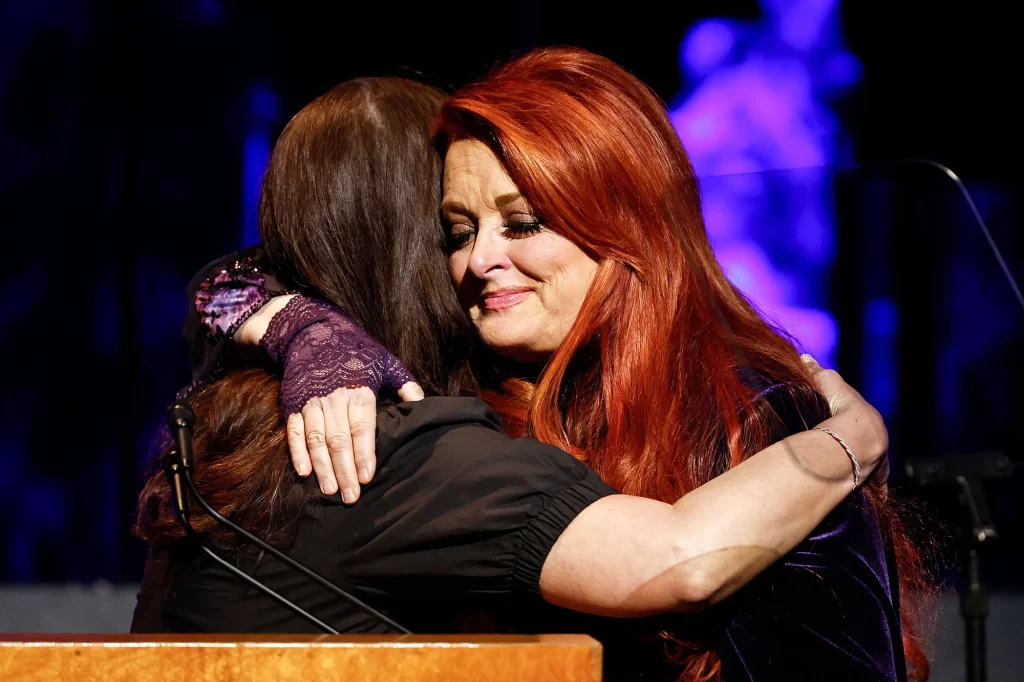
“We lost our beautiful mother to the disease of mental illness.”
Wait… what?
The words were deliberate. Powerful. And full of truth.
It was a teachable moment, gracefully fulfilled. Earlier this month, I stopped in my tracks when Ashley and Wynonna Judd uttered these words to the public, announcing the sad, untimely death of their mother, the beloved country music icon.
Not because I’d been a fan, but because of the wording.
Died of mental illness? I’d never, EVER heard that phrase uttered before. Whoa, could someone actually DIE of mental illness? What does it do to the body? How does it actually kill you? And wait, what does that actually… mean?
All these thoughts raced through my head in 2.5 seconds. And a few moments later, like so many, I realized that perhaps poor Naomi had passed by her own hand.
REWIND. Now imagine you wake up and hear on the news, “Country singer Naomi Judd was found dead this morning of an apparent suicide.” 90 percent of the world would have this reaction: “Oh… another famous person with money, fame, family and still they killed themselves. When will they ever learn? Ho-hum.” Change the channel.
Words. Have. Power.
I take my hat off to Ashley and Wynonna Judd for being determined and deliberate in announcing that their mother had been taken away from them by mental illness, immediately framing it in a different context. A true context. A treasured friend of mine said it best: “For them, that was absolute TRUTH, because they’d watched her decline and watched her struggle with the illness for a decade before the death.” Apparently in her 2016 book, River of Time, Naomi Judd herself wrote about her struggles with depression and anxiety and admitted having suicidal ideation.
I’m not saying “death by mental illness” needs to become code for suicide. There are plenty of people, sadly, who take their own lives impulsively, in the moment, due to a job loss, loss of a loved one, finances, stress, to escape capture or a terminal physical health issue. But I’m here to say this all resonated with me because of my first-hand experience with unexpected depression and anxiety and — fine, I’ll say it — mental illness, in 2020/ 21.
In interviews, Ashley Judd said, “It’s important to make the distinction between our loved one and the disease. It’s very real, it lies, and it’s savage.”
It is indeed a savage lie of the mind, for my mind was fixated, determined to find a way out – plotting, planning, researching ways to end my life, despite being surrounded by so much love and support.
It made no sense. None of it was based on a reaction to bad life circumstances. It was my brain chemistry, lying to me, and I just wanted the suffering to END.
So yes, mental illness as a topic is scary – something we don’t want to contemplate. But then, so is Alzheimer’s. So is Parkinson’s. So is ALS. Even paralysis or blindness. No one enjoys admitting a mental health battle, for it scares people, and there’s still so much judgment and wariness. But that is why I continue to talk about it openly.
Now, when I hear someone has lost the battle to suicide, of course I’m saddened. But I have a new understanding, one full of legitimate empathy.
No longer do I think someone should’ve just had a stronger disposition to not become that way, to fight it.” For I know better. Would we say the same thing about someone diagnosed with cancer? Or epilepsy? That they should’ve been stronger? Nah. It’s a matter of managing it like any other illness, often with medication, if needed, as was the case with me, thankfully.
It’s multi-layered. It’s complicated. Just like the brain itself. There are no 100% definitive answers. But May is about Mental Health Awareness, and I couldn’t let the month slip away without recognizing and honoring the Judd family in speaking their truth and in turn making the world pause, ponder, consider, and realize that mental illness deserves our “respect” and full medical attention.
Peace – be good to yourselves out there, folks.
Recent posts

Theater Lovers KNOW – Chita Did It First!

Allow Me to Just Step Over HERE

When Mildred Was a Wild One
Angie & Me: Love Affair with a Middle-Aged Lady

Jingle Hell – How Christmas Kills
You Better WORK

On Being a Little Light in the Loafers
A Trait that Drives Friends Batshit Crazy !

The Weekly Celebrity Sighting

This is a great perspective that I overlooked. It does shed more light to an often neglected situation. We all think they have fame and money so what else could they want? It’s the peace of mind we all look for. R.C. Sproul tells a story in one of his books about visiting The famed Miami quarterback Bob Griese and his wife. She was passing away with cancer and wanted answers about her afterlife. He sat with her for over an hour as she talked. When he was getting up to leave she thanked him. He asked her why she thanked him because all he did was sit there and listen to her talk. She said exactly. Sometimes you need someone to listen. That hit me like a ton of bricks. We need to let people tell their story while we listen. I can’t wait to read more of your thoughts! It makes me think and listen!
Thanks, Chuck –
Yep, it’s true. So many of us are in “fix-it” mode – if someone is telling us something, then they obviously must want our advice on how to “fix the situation” as quickly as possible. Some people are wired that way, to find solutions, and that’s great. But I’ve had to learn that sometimes people just want you to sit there and listen, to get things off their chests, to try and empathize rather than, “Okay, so here’s what I’d do to fix that problem.” It’s hard to learn – and it’s hard to tell what someone wants – some people DO want your advice and help. It’s just good to challenge yourself to JUST listen every so often – it’s difficult. Thanks for your kind words.